Rotating Detonation Engine FEA Simulations and Analysis of the Manifold
About
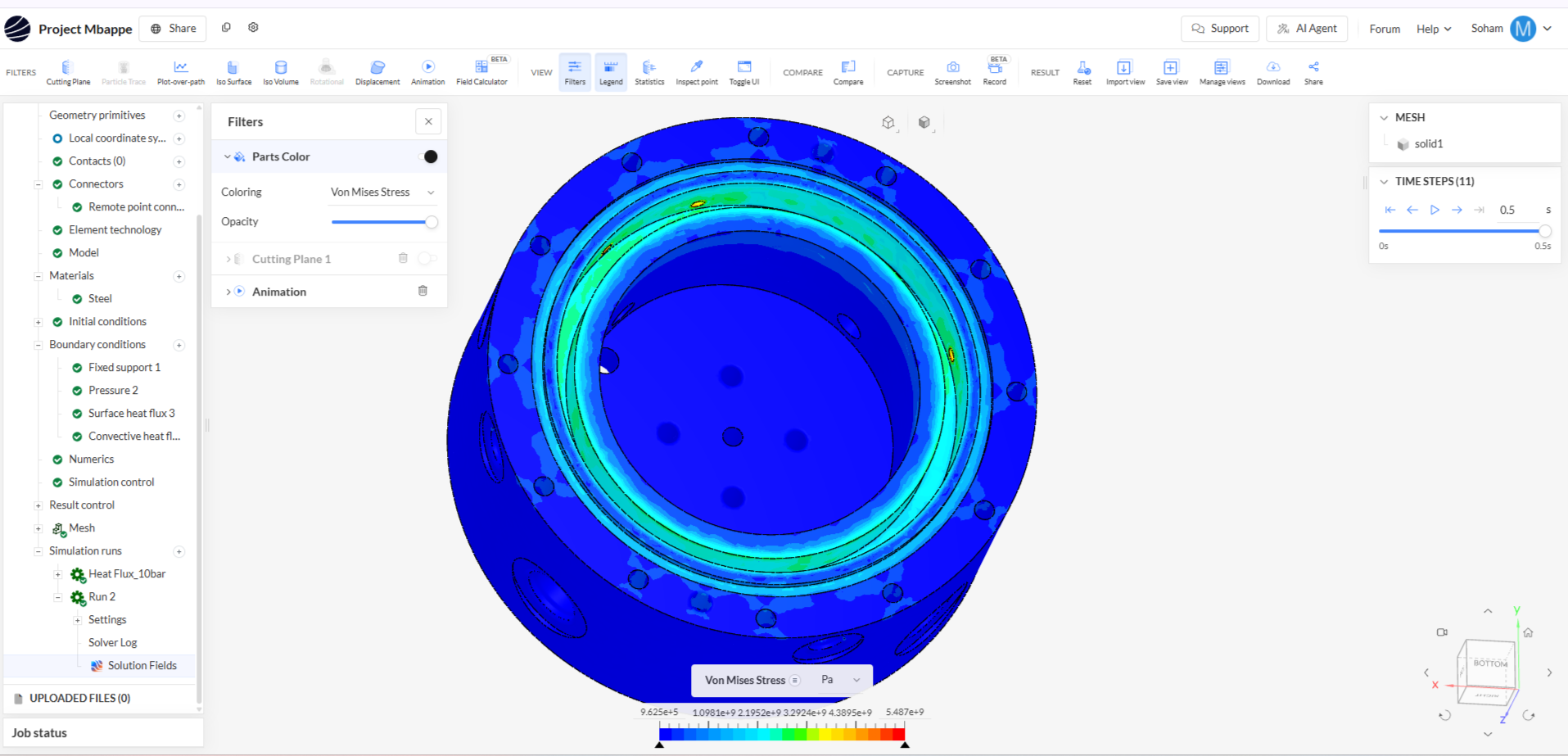
To evaluate the RDE manifold under extreme operating conditions, I used both static structural and multi-step transient thermomechanical FEA. Static simulations made sure the manifold and pressure-testing leak plates could withstand high internal pressure loads without yielding. The transient thermomechanical models captured the rapid, cyclic heat fluxes from the detonation dynamics. Doing this helped me map out localized stress concentrations, evaluate thermal fatigue, and make sure the engine design would hold up during sustained firing.
This simulation helpd validate the HADES RDE engine design. More importantly, I am using this data for making a transpirational cooling solution for our engine for longer hotfire times.
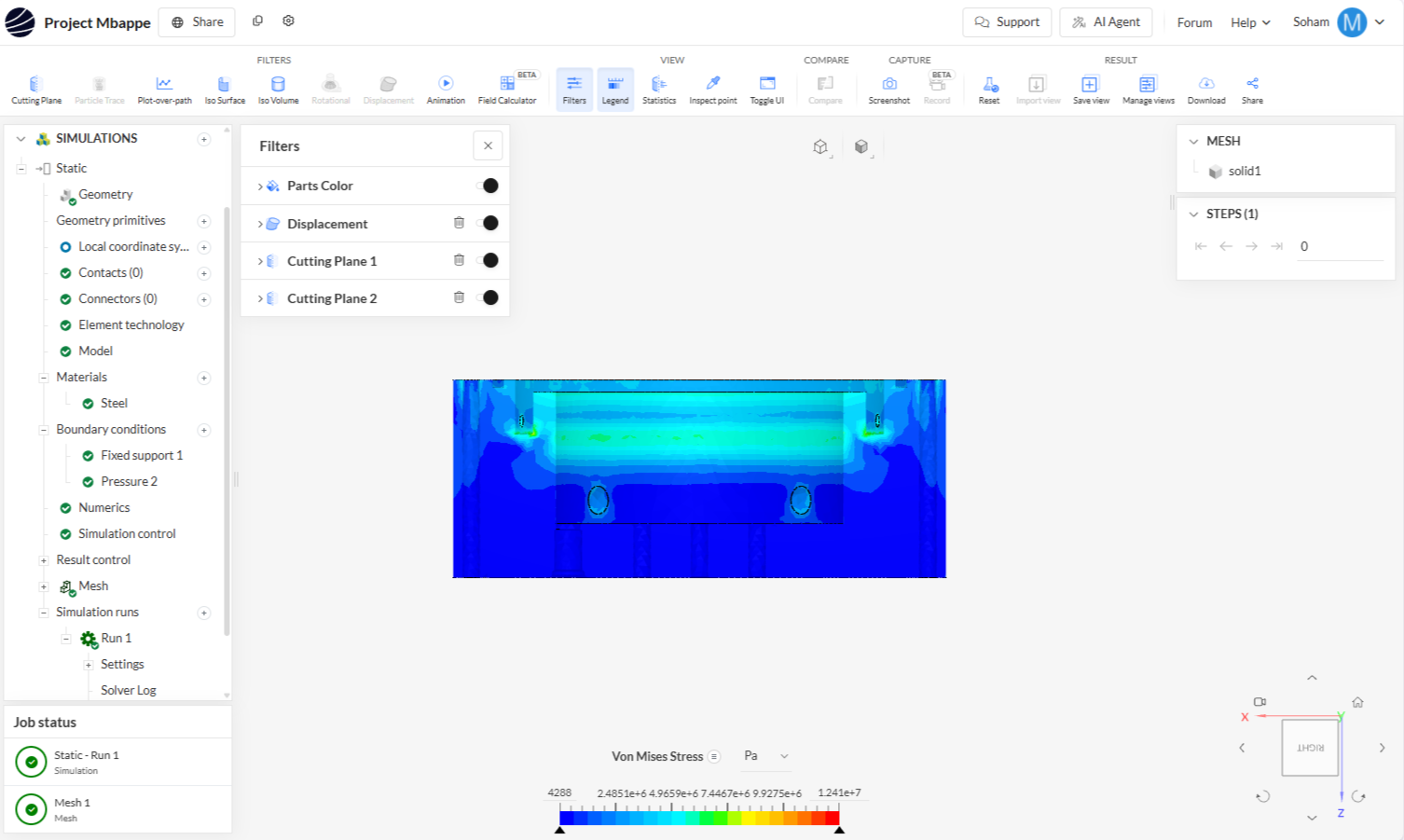
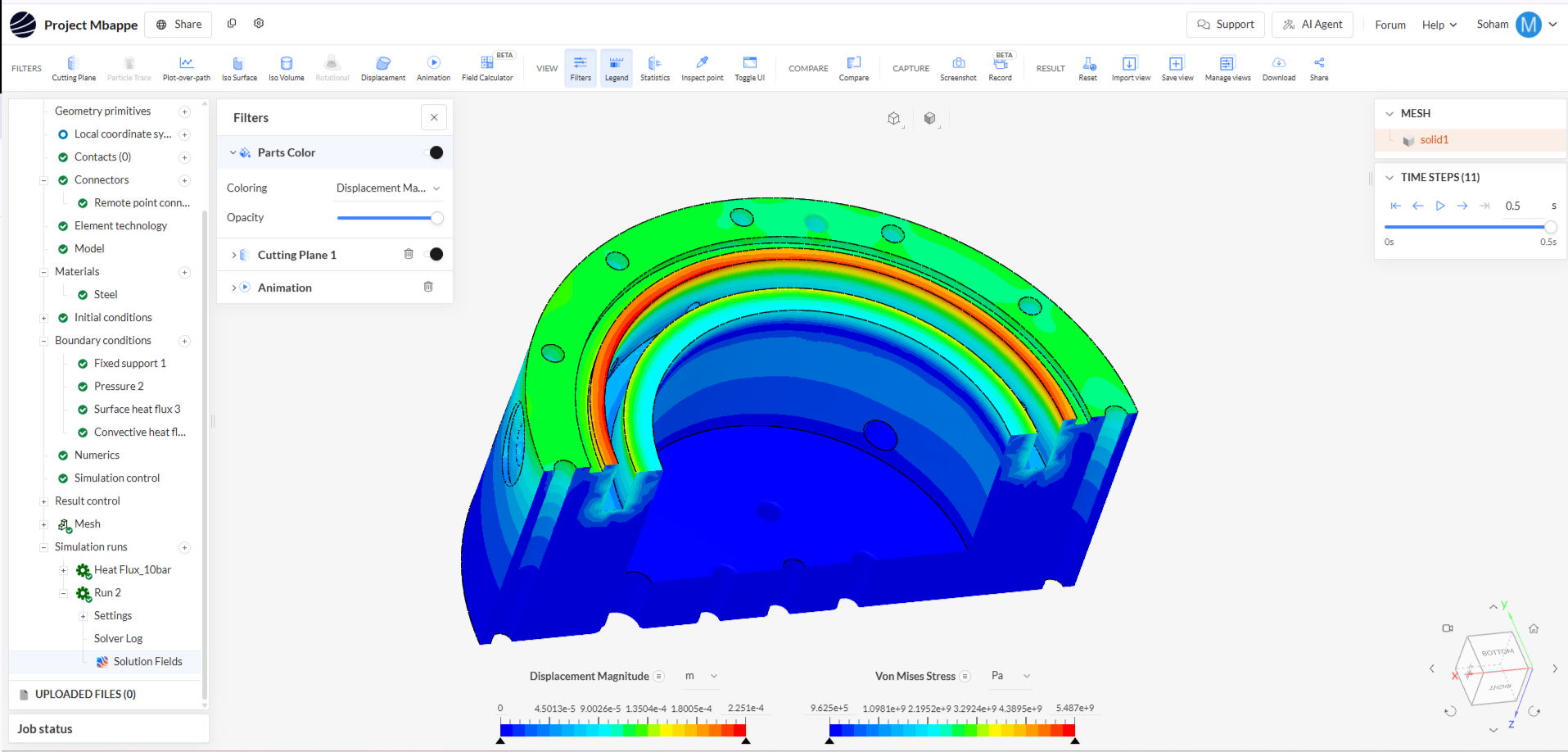
This visualization shows the Von Mises stress and displacement magnitude across the manifold during a transient thermomechanical simulation. For this specific run, a 10-bar internal pressure was applied along with surface and convective heat fluxes to simulate active firing conditions over a 0.5-second time step. The exaggerated results show that the highest stress and deformation (only 0.225 mm) happen along the inner annular channels, which reasures us that the manifold won’t fail under extreme conditions.